
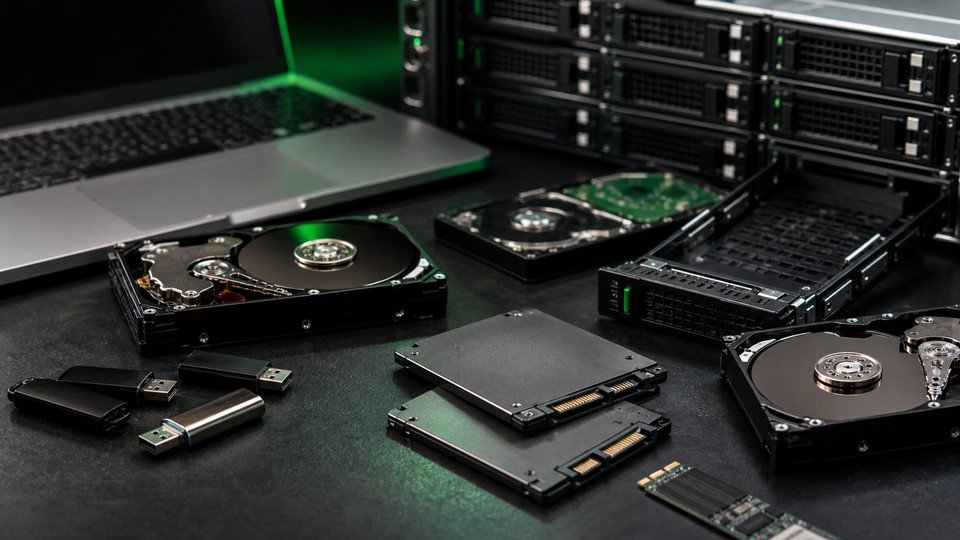
Data-bearing electronics appear throughout offices, schools, warehouses, and homes. Identifying them is an important first step in planning secure recycling or reuse.
Computers, servers, and storage systems
Desktop computers, laptops, servers, network-attached storage, storage arrays, and external drives commonly retain business files, credentials, customer records, and system backups. Internal drives may remain in a device even when it no longer powers on.
Phones, tablets, and mobile devices
Mobile devices can retain contacts, photographs, messages, authentication data, and account access. Remove SIM and memory cards when appropriate, sign out of services, and document any devices that require controlled handling.
Copiers and network equipment
Some copiers, routers, and firewalls can contain storage or configuration data. Equipment from server rooms and network closets should be reviewed with the same care as computers.
Removable and archival media
USB drives, memory cards, optical discs, backup tapes, and other removable media are easy to overlook because of their size. Keep them together and clearly marked so they are not mixed into general accessories.
Plan the handling path before pickup or drop-off
Ask whether your organization needs serialized inventory, wiping, physical destruction, chain-of-custody records, or certificates. Requirements should be agreed upon before the service date.