
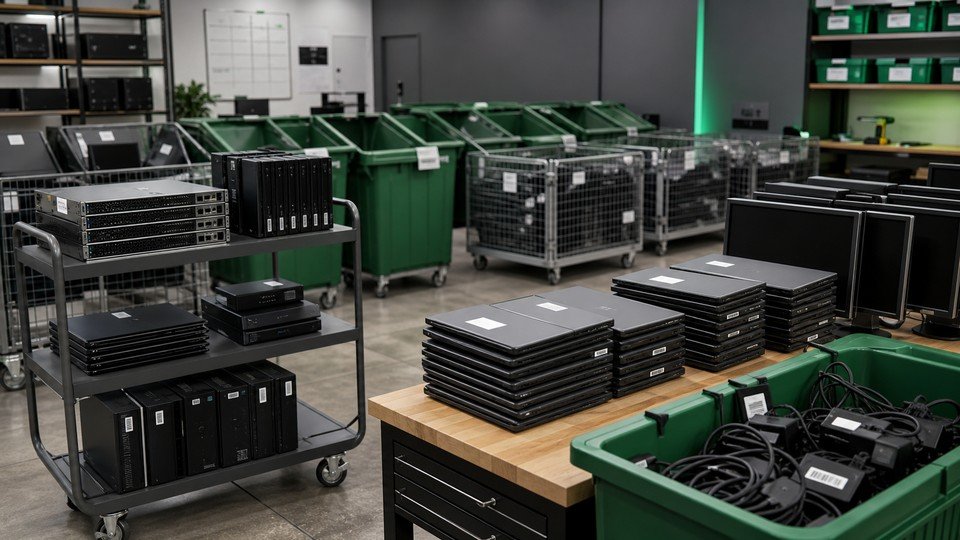
Organizations that replace technology throughout the year benefit from a repeatable electronics recycling process. A recurring program creates clear ownership, predictable staging, and better information before each pickup or drop-off.
Define what enters the program
Create a practical list of covered equipment such as laptops, desktops, monitors, servers, network hardware, storage devices, phones, accessories, and cables. Establish a separate review path for damaged batteries, unusually heavy assets, or equipment with special handling needs.
Choose collection points
Designate secure staging areas that do not block exits, workspaces, or loading paths. Data-bearing devices should remain controlled and separated from general accessories until their handling requirements are confirmed.
Use a consistent inventory format
A simple spreadsheet can track equipment type, quantity, department, location, condition, service preference, and data status. Consistency matters more than complexity because it gives every service request the same starting information.
Set a review cadence
Monthly, quarterly, or project-based reviews can prevent retired equipment from accumulating. The right cadence depends on device turnover, available storage, security policy, and the number of participating locations.
Review and improve
After each service, note missing inventory details, access delays, or equipment categories that required extra attention. Small adjustments make the next cycle smoother and easier for employees to follow.