
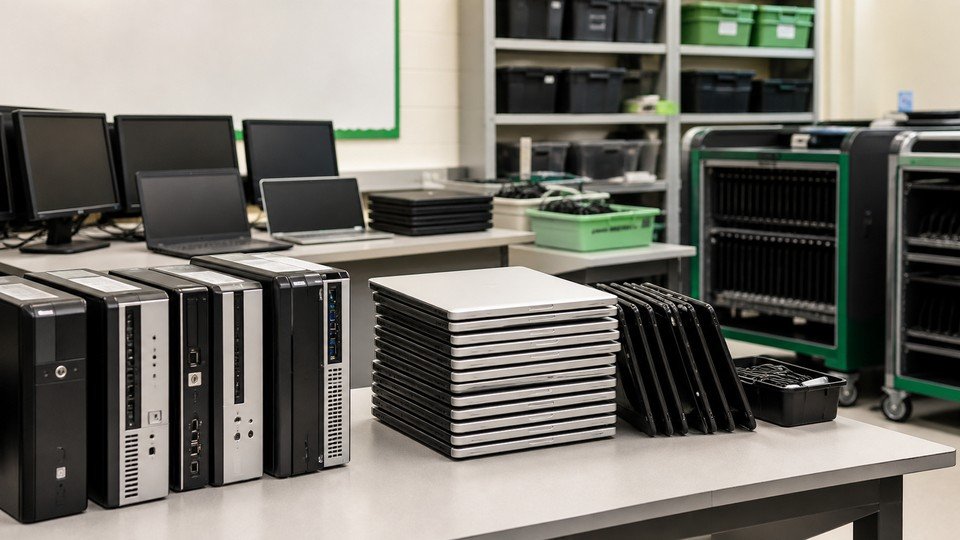
School electronics collections often involve many departments, device types, and data owners. A coordinated plan helps staff gather equipment safely while keeping student, employee, and administrative data in view.
Assign a project owner
Choose one person or team to collect department inventories, answer service questions, and approve the final equipment list. Central ownership reduces duplicate requests and prevents active devices from being removed by mistake.
Collect inventories by location
Ask classrooms, computer labs, libraries, offices, and storage areas to report equipment separately. Useful details include device type, quantity, condition, room number, floor, and whether an item contains storage media.
Separate data-bearing devices
Computers, servers, tablets, phones, hard drives, SSDs, tapes, and removable media should be identified before pickup or drop-off. Keep them grouped and discuss any inventory, wiping, destruction, or documentation requirements in advance.
Plan building access or drop-off
Coordinate visitor procedures, parking, loading areas, elevators, bell schedules, restricted hallways, and a safe staging location for pickups. For drop-offs, confirm accepted items before transporting equipment to the warehouse.
Close the project with clear records
Before service, decide which departments need service records, asset lists, or other documentation. Consistent intake information makes the final handoff easier to review internally.