
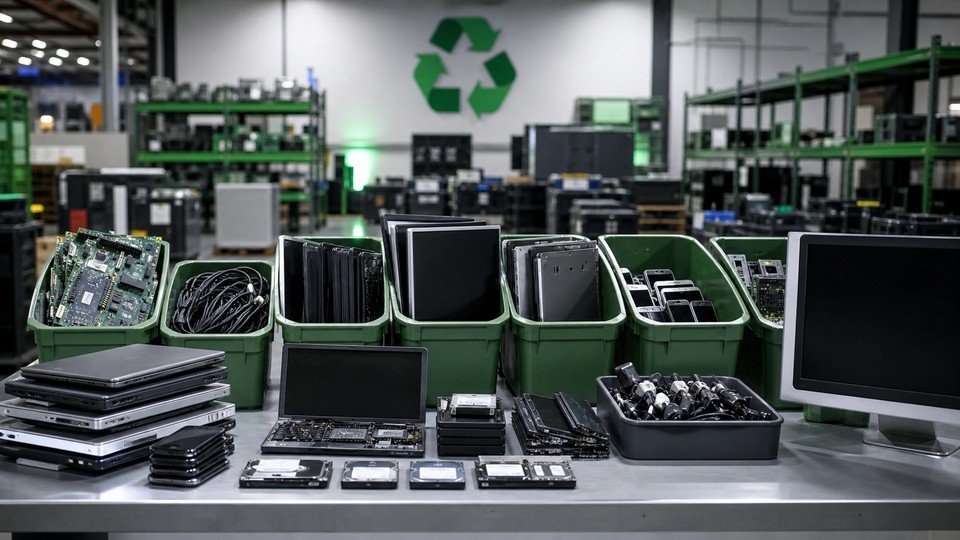
Responsible electronics recycling is a sequence of decisions, not a single destination. The right handling path depends on equipment condition, data risk, reuse potential, safety, and material type.
Intake and sorting
Equipment is reviewed by category and condition. Data-bearing assets, reusable systems, accessories, and end-of-life material may be separated so each group can follow an appropriate downstream process.
Data-aware handling
Devices identified as containing data require special attention. The agreed service may include inventory, wiping, destruction, or documentation. This step should match the customer’s internal policy and be established before service begins.
Reuse and asset recovery
Working or repairable equipment may be evaluated for reuse or value recovery. Extending the useful life of suitable electronics can reduce waste and preserve more of the resources already invested in manufacturing.
Material recovery
Equipment that cannot be reused can be dismantled and separated into material streams. Metals, circuit boards, plastics, cables, and other components require different processes and responsible downstream routing.
Documentation and follow-up
Business and organization customers should discuss inventory and reporting needs while planning pickup or drop-off. Clear expectations make it easier to maintain internal records and close out a technology refresh or cleanout project.